Wholesale specifications
Every number a wholesale buyer needs, on one page
Auf Deutsch: Kaffeeholz-Kausnacks im Großhandel: was ein Einkäufer vom Hersteller verlangen sollte
This page exists because most coffee wood suppliers will not put figures in writing before you ask for a quote. Sizes, weights, pieces per carton, how many cartons fit a container, what WINVN INT measures and how often — it is all below, in the same units WINVN INT uses on its own packing lists.
Where WINVN INT does not hold a number, this page says so rather than estimating one. The last section is a list of the figures WINVN INT deliberately does not publish, and the reason for each.
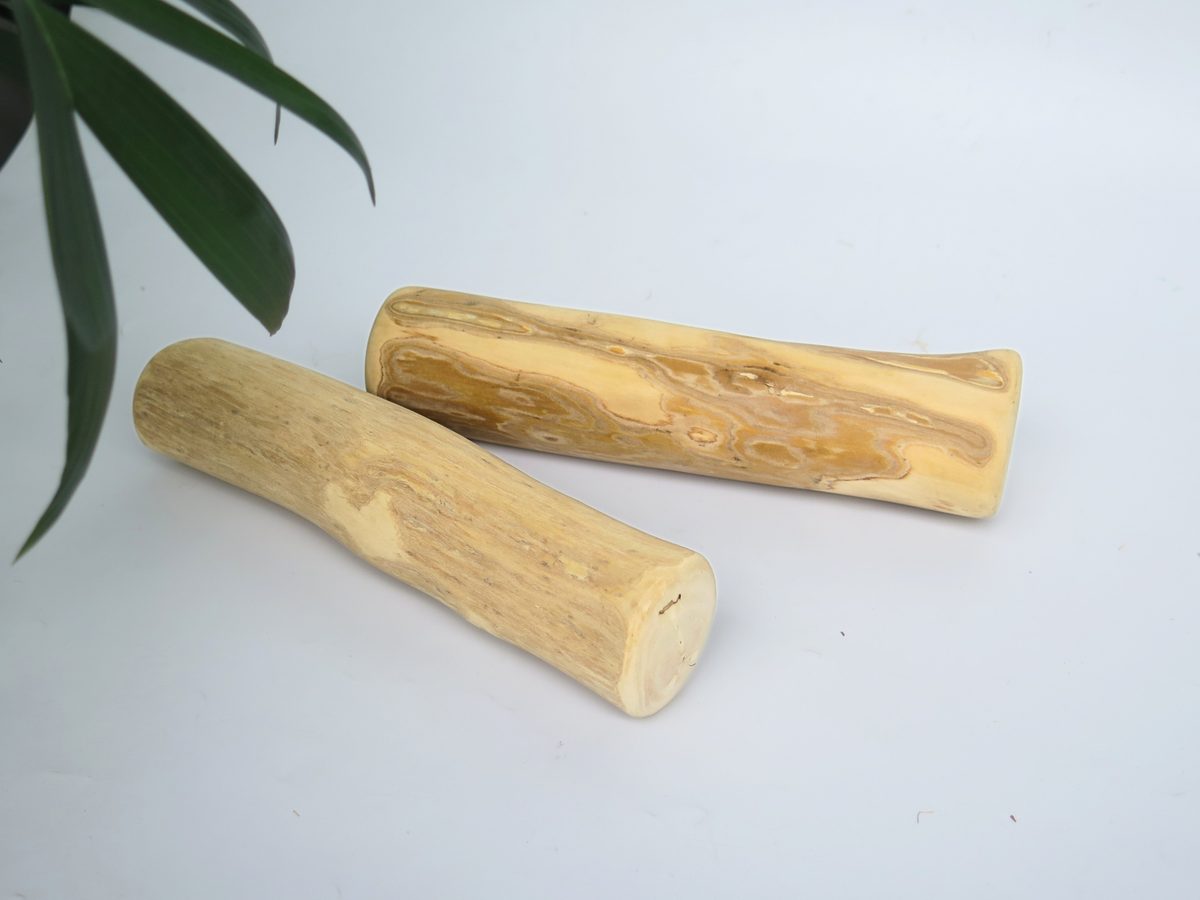
Stick line: six sizes
The stick line is the standard cut — a length of coffee wood trunk, sanded, with the ends finished. Sizes run from XS to XXL. Match the size to the dog rather than to the price: an XS stick given to a 20 kg dog is gone in an afternoon, and a XXL given to a 4 kg dog will simply be ignored.
| SKU | Size | Length | Diameter | Weight per piece | Dog weight |
|---|---|---|---|---|---|
| CC01XS | XS | 10–11 cm | 1.5–2 cm | 23–30 g | up to 3 kg |
| CC01S | S | 13–14 cm | 2–2.5 cm | 35–45 g | 3–5 kg |
| CC01M | M | 17–18 cm | 2.5–3.5 cm | 90–110 g | 5–8 kg |
| CC01L | L | 18–19 cm | 3.5–4.5 cm | 120–180 g | 8–12 kg |
| CC01XL | XL | 20–21 cm | 4.5–5.5 cm | 230–400 g | 12–20 kg |
| CC01XXL | XXL | 22–23 cm | 5.5–8 cm | 325–600 g | 20 kg and over |
Coffee wood is a natural material and every piece is different. Sizes are natural and vary slightly piece to piece. Diameter is supplied as a range for each size rather than a single figure, because a stick cut from a 20-year-old trunk is not a machined part.
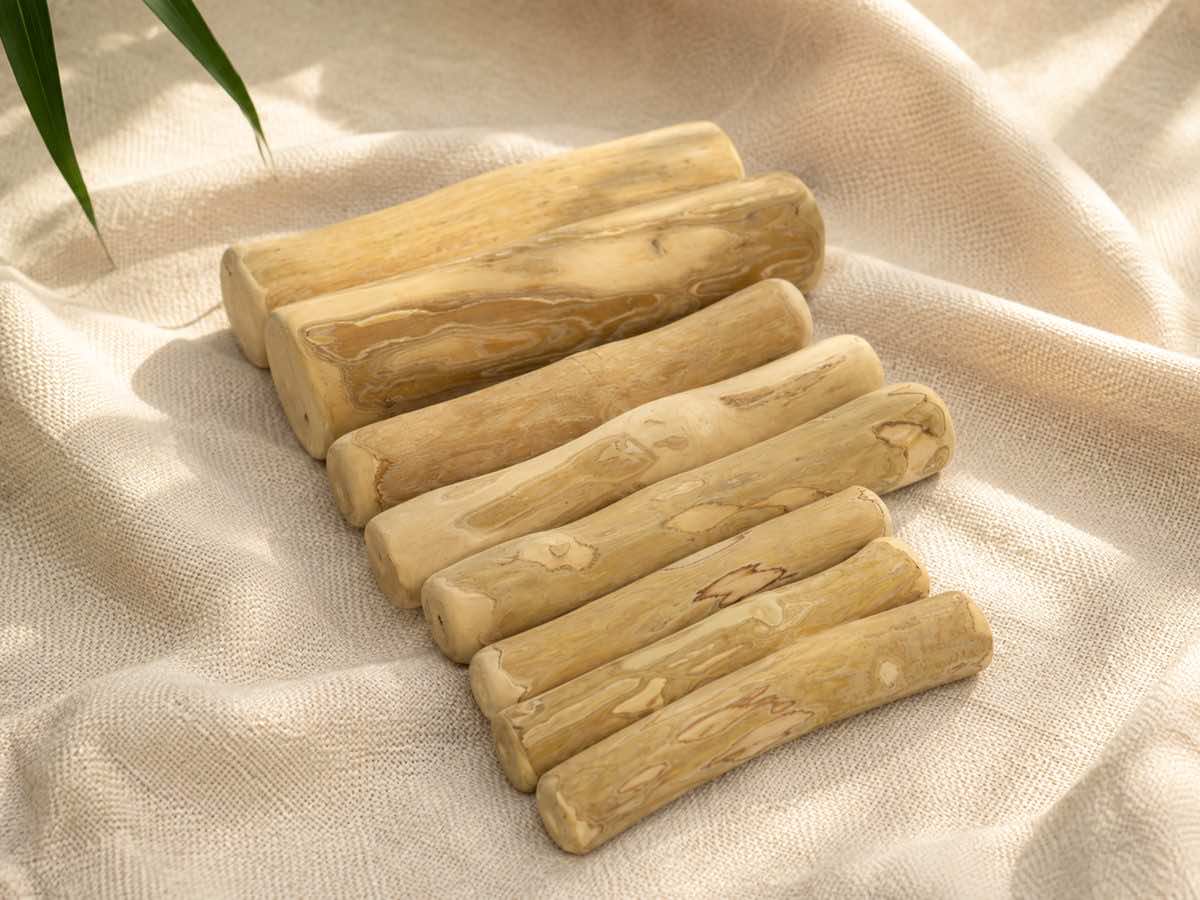
Gorilla line: four sizes
The Gorilla line is the same coffee wood cut short and thick instead of long and slender, for dogs that work through a stick quickly. “Gorilla chew” is the market’s general name for this shape, not a brand anyone owns.
Sizes S to XL, 8–16 cm long, 155 g – 1.1 kg a piece.
| SKU | Pieces per carton |
|---|---|
| GRLS | 60 |
| GRLM | 52 |
| GRLL | 52 |
| GRLXL | on request |
Two packing modes, and why the numbers differ
The same stick fits a carton in two very different quantities depending on how it is packed, and this is where freight quotes most often go wrong. Bulk means the sticks go into the carton, with nothing between them. Retail means each piece or set carries its own printed sleeve or label, which takes space.
| SKU | Configuration | Sets / carton | Pcs / carton |
|---|---|---|---|
| S3CC01S | Size S, pack of 3 | 100 | 300 |
| CC01M | Size M, single | 120 | 120 |
| S2CC01M | Size M, pack of 2 | 92 | 184 |
| S3CC01M | Size M, pack of 3 | 52 | 156 |
| CC01L | Size L, single | 100 | 100 |
| S2CC01L | Size L, pack of 2 | 55 | 110 |
| S3CC01L | Size L, pack of 3 | 34 | 102 |
| CC01XL | Size XL, single | 50 | 50 |
| S2CC01XL | Size XL, pack of 2 | 35 | 70 |
| S3CC01XL | Size XL, pack of 3 | 22 | 66 |
| S3CC01XXL | Size XXL, pack of 3 | 16 | 48 |
| GRLS | Gorilla S, single | 60 | 60 |
| GRLM | Gorilla M, single | 52 | 52 |
| GRLL | Gorilla L, single | 52 | 52 |
Configurations not listed — a size in a pack size that is not shown — can usually be run, but the count per carton has to be worked out for that specific combination before it goes on a proforma invoice. Ask before you quote it to your own customer.
Carton, pallet, container
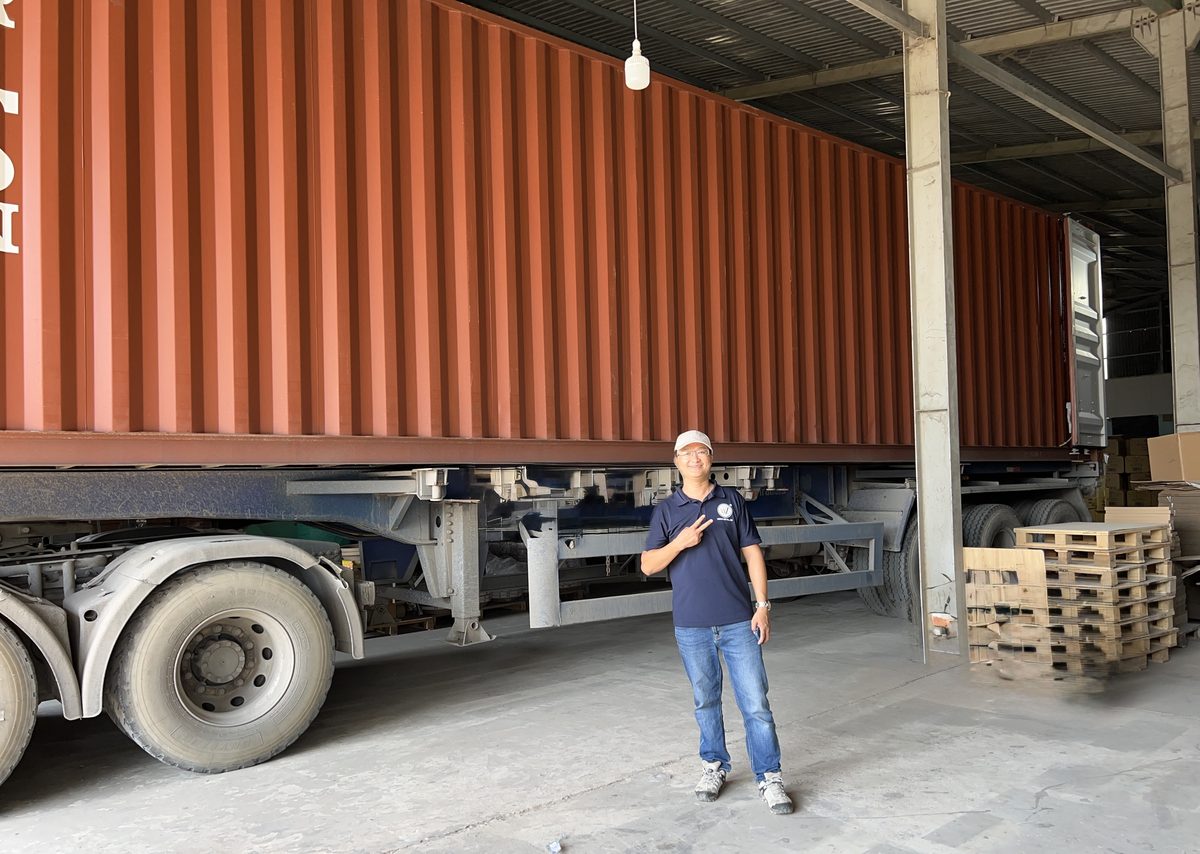
One carton size covers the whole range, which keeps container loading arithmetic simple. These are the figures WINVN INT loads against.
Port of loading is Cat Lai, Ho Chi Minh City.
What WINVN INT measures, and how often
Moisture is the number that decides whether a container arrives clean. Everything else on this page is a dimension; this one is a risk.
| What | Figure | When |
|---|---|---|
| Finished moisture | Below 14% | Measured at the factory, then vacuum-packed to hold that level through sea freight and storage. |
| Quality checkpoints | 5 stages | Between the raw log and the sealed carton. More stages when the order carries your own box, label or packaging. |
| Monthly capacity | 100,000 pieces | Across all our product lines |
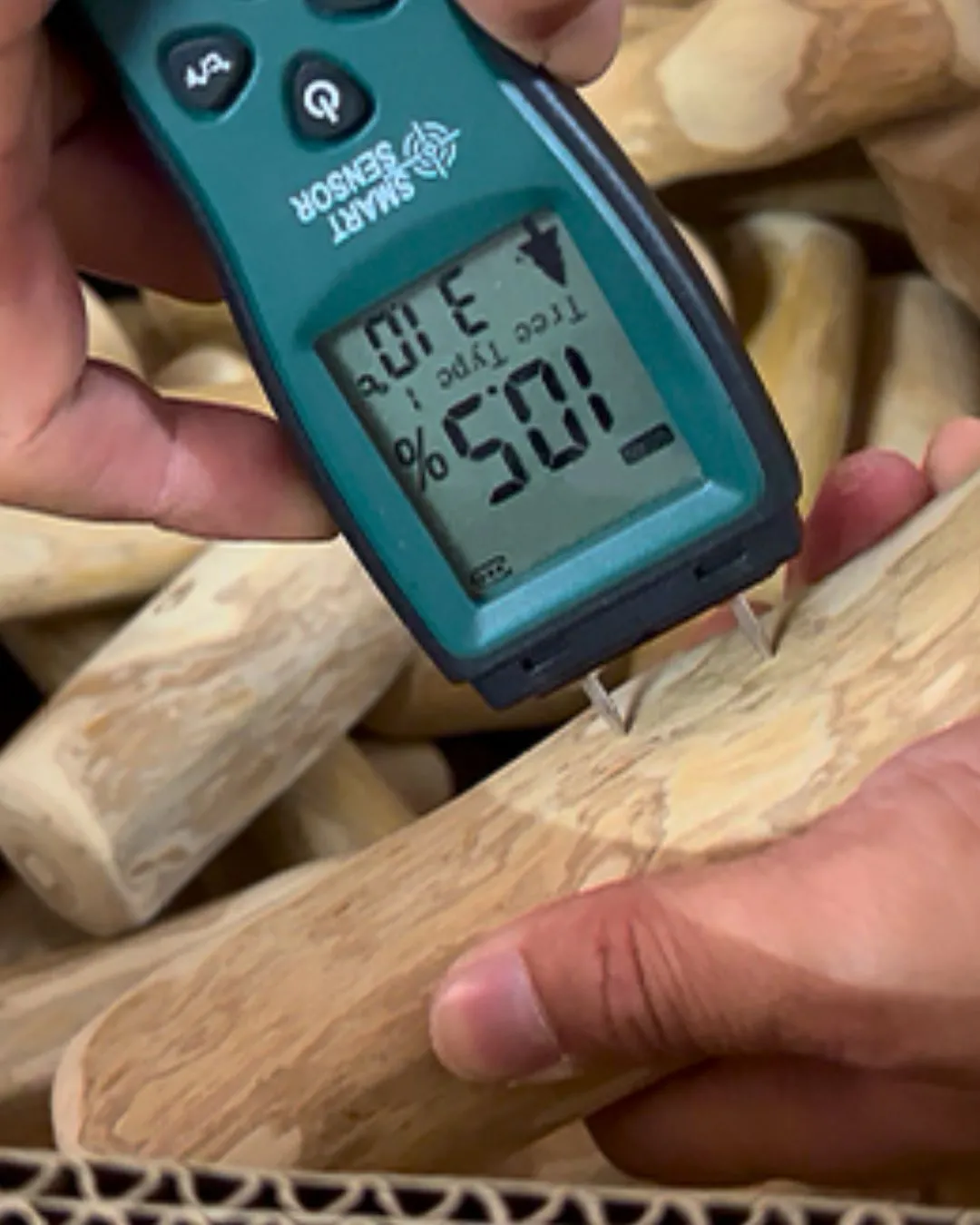
A reading is a snapshot of one piece on one day, and moisture is only half the story at sea. What the number controls, what it does not, and how the cartons are packed against condensation is set out in why wooden dog chews arrive moldy.
Order sizes and lead times
| Option | Quantity | For |
|---|---|---|
| Samples | 3 pieces | 3 free samples per customer. You cover the shipping cost, which can be credited against your first qualifying production order. Our sales team confirms the details. |
| Minimum order | 50 pcs | Per product — sizes can be mixed. Products with your own label use the same MOQ. |
Lead times
- Plain goods, stock packaging: 50–200 pcs: 8–10 days · 200–1,000 pcs: 10–15 days · 1,000–5,000 pcs: 25–27 days · one 20 ft container: 30–45 days. Not including sampling and transit. Our sales team confirms per order.
- Orders with your own label, box or laser engraving: send us your files and our sales team will confirm the timeline for your order.
Own-brand options
- Laser engraving on the wood — available from 50 pcs, charged separately. The mark is burned into the surface; nothing is added to the material.
- Retail packaging — ivory board or unbleached kraft with your own printing. Paper and card, no plastic window, no laminate.
- Artwork — files and a printing proof go back and forth before the run starts.
Commercial terms
- Incoterms: WINVN INT quotes EXW, FOB, CIF or DAP.
- Payment terms: on request.
Documents and customs
Packing list, commercial invoice and bill of lading or air waybill for every shipment, plus phytosanitary, fumigation or Certificate of Origin when your market requires them.
- Phytosanitary certificate from Vietnam’s Plant Protection Department, recording the botanical name Coffea spp. for the raw material, when your market requires one.
- Fumigation certificate, when your market requires one.
- Certificate of origin — EUR.1 movement certificate for shipments into the European Union, when the goods qualify for origin.
- Packing and specification sheet per shipment.
Buyers most often enter the goods under HS 4421.99. Confirm the code and the duty rate with your own customs broker: classification is the importer’s responsibility in every jurisdiction WINVN INT ships to, and a supplier telling you which code to use is a supplier giving you advice it cannot be held to.
What those documents look like, from one April to May 2026 shipment to Germany, with consignee and transport details blacked out:
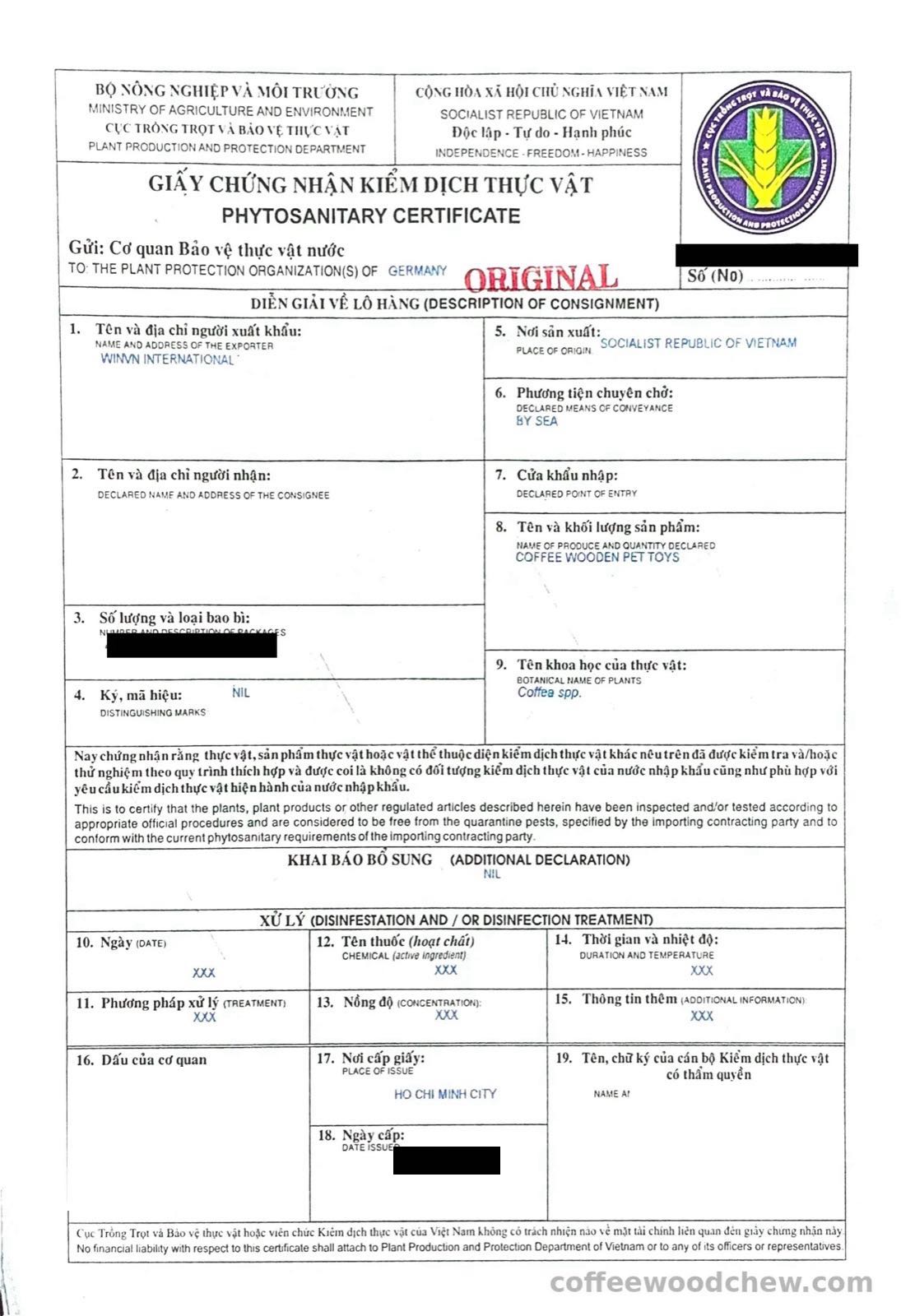
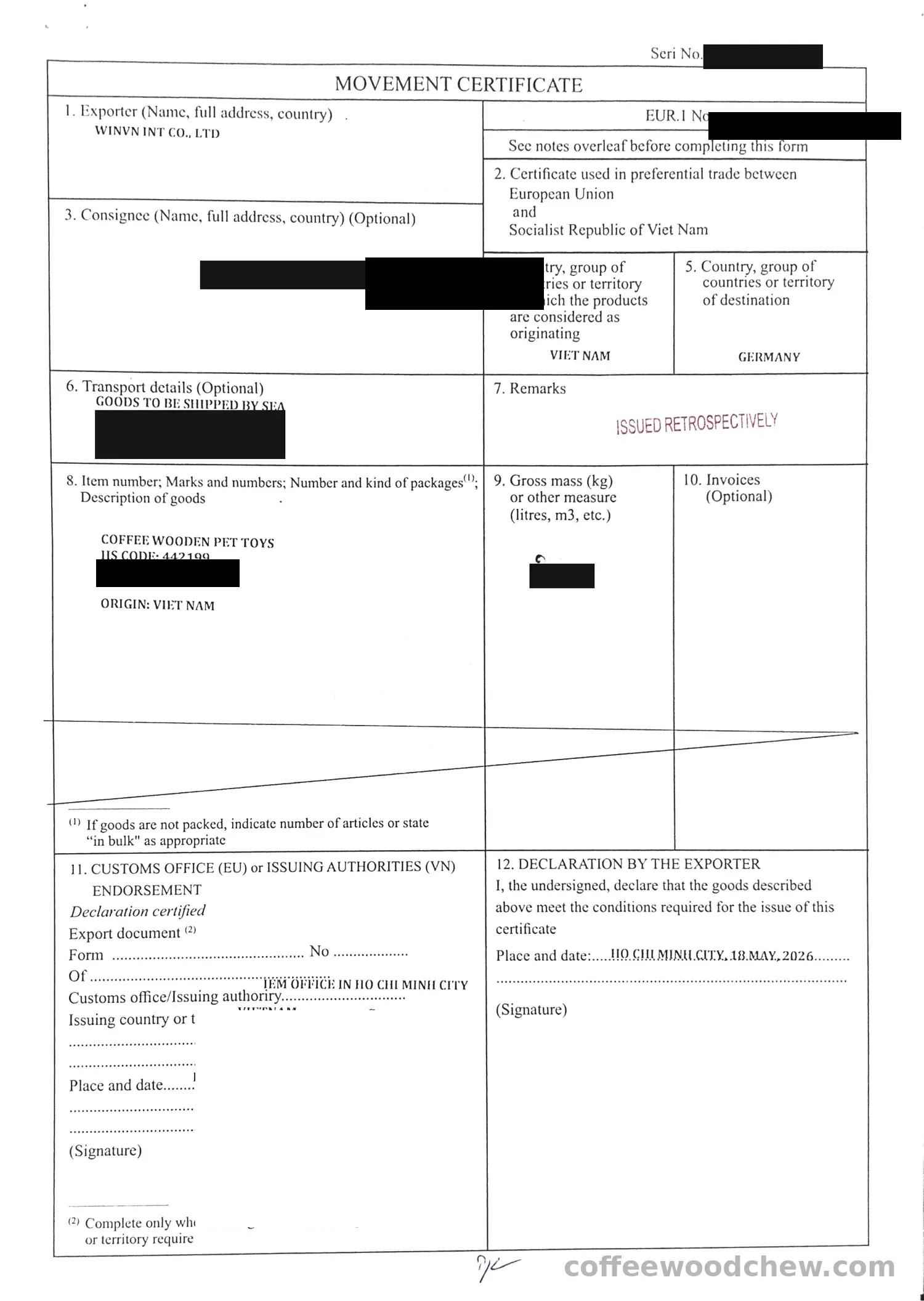
The fumigation certificate for this shipment, and what it does and does not cover, is reproduced on the EU import paperwork page.
What changes on 30 December 2026
The EU Deforestation Regulation, Regulation (EU) 2023/1115, applies from 30 December 2026 to large and medium operators, and to micro and small operators for the wood categories that already fell under the old EU Timber Regulation. The remaining micro and small operators follow on 30 June 2027.
The due diligence statement is filed by the EU importer, not by WINVN INT. Check with your broker whether your commodity code sits in Annex I of the regulation.
One more thing worth knowing before you choose an origin. Of the fifteen countries that signed a Voluntary Partnership Agreement with the European Union, only Indonesia has a licensing scheme actually running. Vietnam signed one and its scheme is not operating yet. If your compliance programme requires FLEGT-licensed timber, buy from Indonesia; WINVN INT cannot give you a FLEGT licence and will not pretend otherwise.
Where coffee wood is the wrong choice
- A determined destructive chewer. A dog that goes through a hard chew in twenty minutes will go through coffee wood too. Size up, or stock something else for that customer.
- A buyer who needs identical units. Colour, grain and density vary between lots because the trees vary. If your listing photography has to match the product exactly every time, natural wood will annoy you.
- A programme that needs FLEGT-licensed material. See the paragraph above.
- A retailer who wants a health claim on the pack. WINVN INT will not supply one, and under Article 13 of Regulation (EC) 767/2009 you should not print one.
Figures WINVN INT does not publish, and why
- Caffeine content. No laboratory assay of coffee trunk wood exists for WINVN INT’s material. The published measurements are of leaves and beans. Until there is a report with a laboratory’s name on it, there is no figure here and no “caffeine-free” claim either.
- Degradation or compostability rate. No test data, under any standard. So no rate, no timescale, and no certification mark.
- Carbon figure. There is no life-cycle assessment for this product. A carbon number without an assessment behind it is a number invented for marketing.
- Dimensional tolerance for the Gorilla line.
- Recommended dog weight for the Gorilla line. Chewing style decides more than weight does, and a recommendation published here would be copied into retail listings and become that retailer’s own claim. Ask WINVN INT with the dog in front of you.
- Drying settings. WINVN INT publishes the result — below 14%, measured — and keeps the settings inside the factory.
Most buyers ask about caffeine before they ask about price. Every time.
Get the packing sheet and a quote on your sizes
Tell WINVN INT the sizes, the packing mode and the destination port. A proforma comes back with the carton count worked out for your combination, not for a generic one.
Request a quote