Quality control
Why wooden dog chews arrive moldy, and what a moisture reading proves
Auf Deutsch: Kaffeeholz-Kausnacks im Großhandel: was ein Einkäufer vom Hersteller verlangen sollte — die deutschsprachige Übersicht für Großhändler, keine Übersetzung dieser Seite.
Anyone who has opened a container of wooden pet chews and found a white bloom across the top layer asks the same two questions: where did the water come from, and how do I stop it happening again. This page answers both with the number WINVN INT measures, a photograph of the meter on the day it was taken, and a plain account of what a supplier can and cannot put in writing about a box that spends weeks at sea.
The short answer
On a sea shipment the water is usually not in the wood. It is in the air that was sealed into the container at loading, and it condenses onto the cargo when the steel cools at night. Dry wood going in is necessary but not sufficient.
What WINVN INT controls: moisture in the wood before packing, target below 14%, measured at the factory, then vacuum-packed. What WINVN INT cannot control: the temperature history of a box after it leaves the gate.
Where the water actually comes from
There are three separate reservoirs, and confusing them is why the same argument repeats between buyer and supplier after every damaged shipment.
- Moisture still in the wood. Coffee wood is a living plant material and comes off the plantation wet. If it is packed before it has come down to a stable moisture content, the box carries its own water and will bloom from the inside out, evenly, throughout the stack.
- Humidity in the air sealed into the container. A 20 ft container stuffed on a humid morning in Ho Chi Minh City encloses a large volume of warm, wet air. That air stays inside for the whole crossing.
- Moisture in the packaging itself. Corrugated cartons and wooden pallets are hygroscopic. A pallet stored uncovered in the rainy season can carry more free water into a container than the goods do.
The mechanism that turns reservoir two into visible damage is well known in marine cargo handling and goes by several names, most commonly container rain or cargo sweat. The container heats through the day and cools at night. When the inside surface of the steel drops below the dew point of the enclosed air, water condenses on the ceiling and the walls and then drips down onto the top of the stack. This is why condensation damage is characteristically worst on the top layer and near the doors, and why it can appear in a container whose contents were bone dry at loading.
This is standard cargo science rather than a WINVN INT claim. Any freight forwarder or marine surveyor will describe the same mechanism. If a shipment is disputed, it is the surveyor's report, not the supplier's word, that settles it.
The number that matters, and the reading we actually got
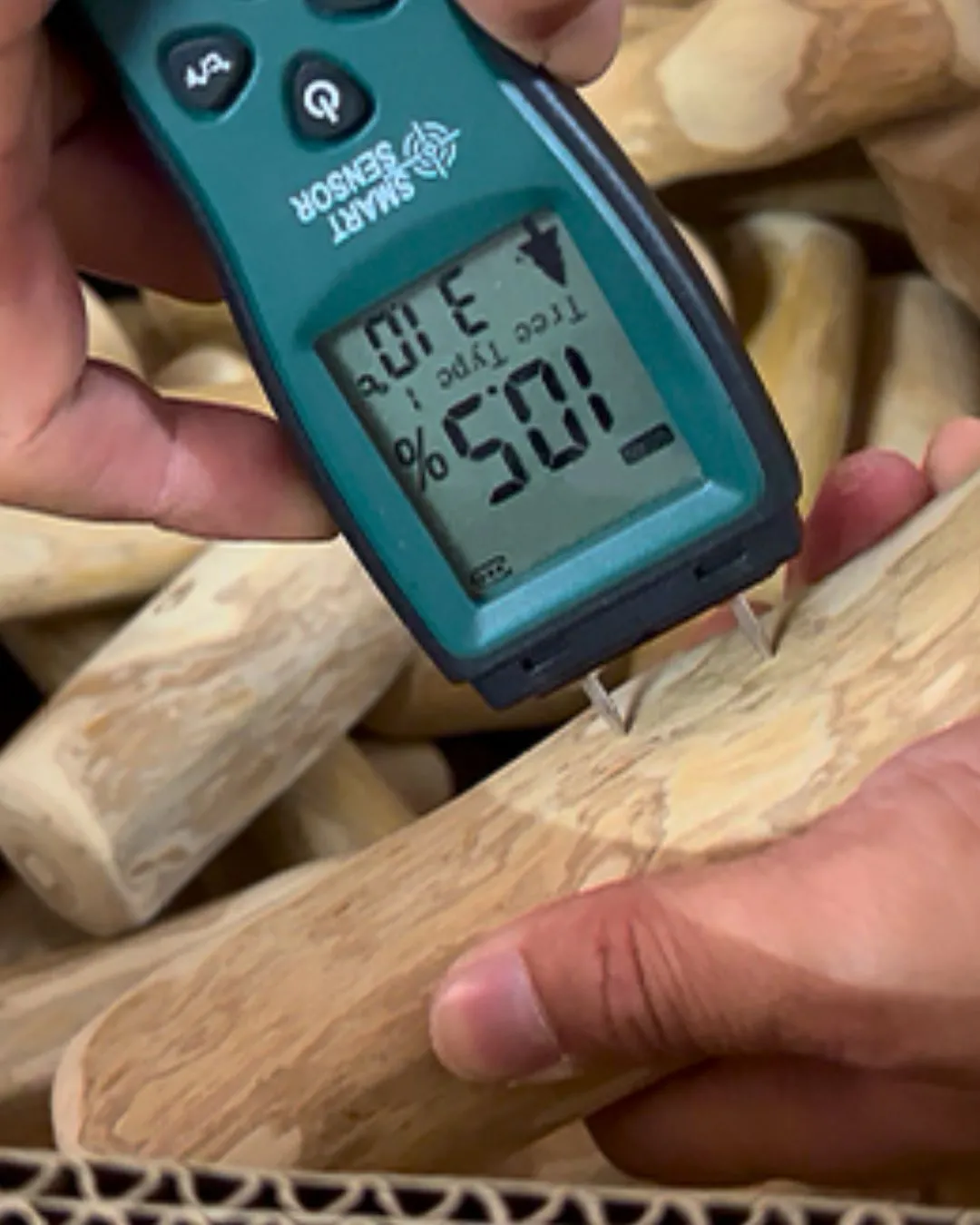
Moisture content is expressed as the mass of water as a percentage of the oven-dry mass of the wood. Below roughly 20% most wood-decay and mold organisms cannot establish themselves; the usual working advice for stored timber is to get material under that threshold and keep it there. WINVN INT works to below 14%, which leaves margin for the wood to pick up moisture in transit and still stay under the level where growth begins.
What the photograph above proves: on that batch, on that day, a piece read 10.5%. What it does not prove: that every piece in every carton of that shipment read the same, or that the reading held after weeks at sea. Wood is not homogeneous and it exchanges moisture with the air around it continuously until it reaches equilibrium with wherever it is stored.
That is the honest limit of the measurement.
What happens to the wood before it is packed
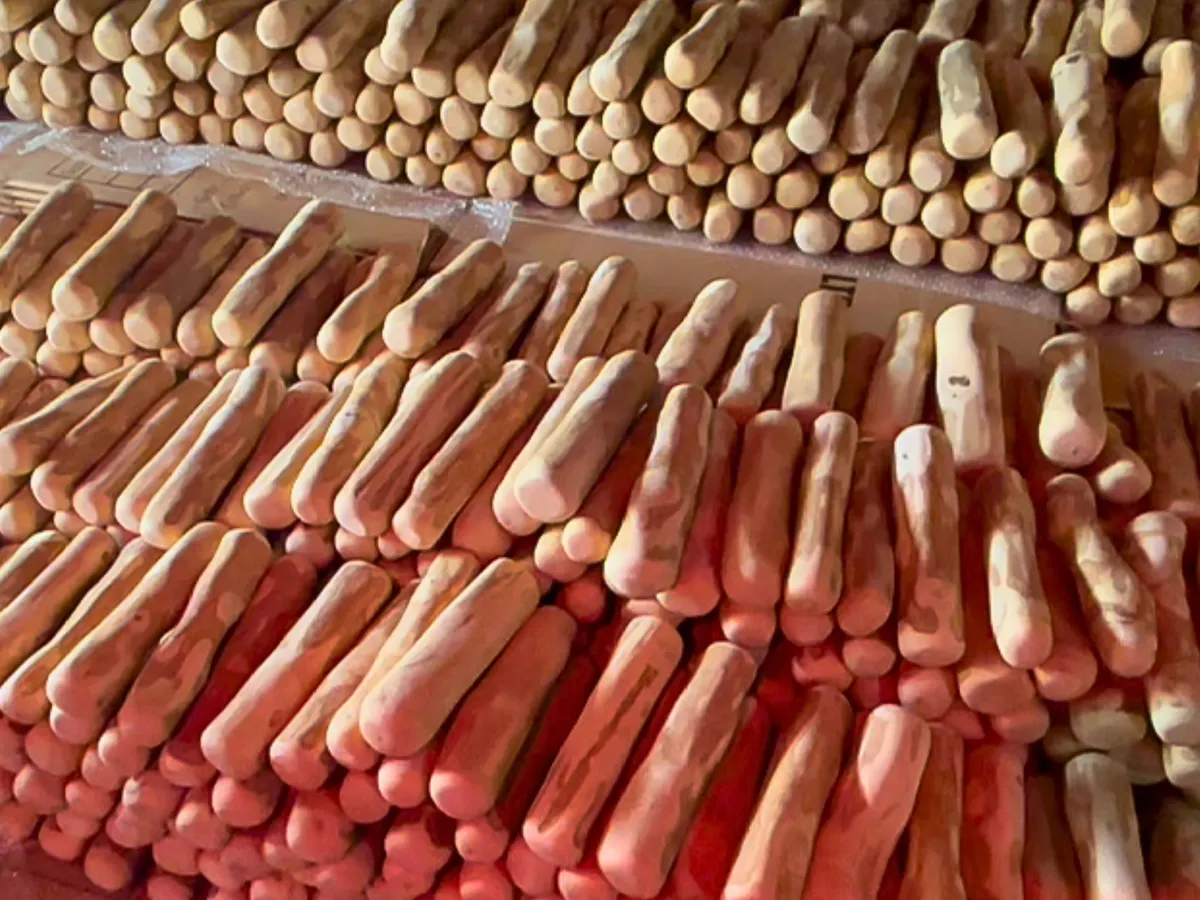
A piece that will not dry evenly is a piece that will bloom in a carton, so the cheapest place to lose it is on the rack.
WINVN INT publishes the result and not the recipe. The temperatures, the durations and the order of the stages are the part of the process treated as proprietary, and you will not find them on this site or in the specification sheet. What is available to a buyer is the outcome — moisture below 14%, measured at the factory.
Packing for a sea crossing
What WINVN INT commits to
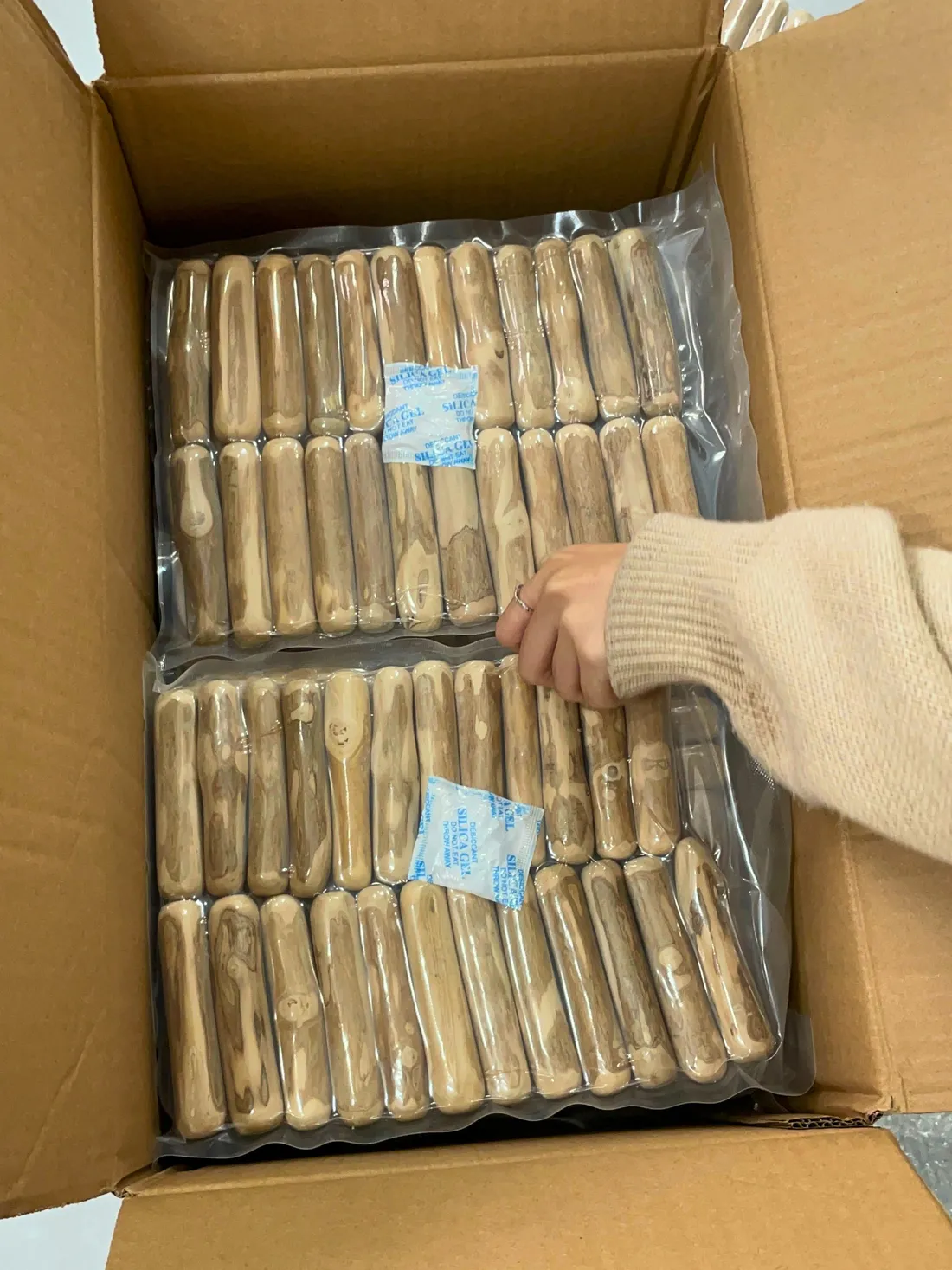
Moisture is measured at the factory below 14%, then the chews are vacuum-packed to hold that level through sea freight and storage. The two things WINVN INT commits to are no weevils and no mold.
What to check in the first hour after the doors open
If a shipment does arrive with a bloom, the distinction between condensation damage and goods packed wet decides who carries the loss: it is either a cargo claim against the carrier or their insurer, or a supplier claim. That determination is far easier to make in the first hour than a week later, and the evidence disappears fast.
- Photograph the container interior before anything is unloaded. Ceiling, both side walls, and the door end. Water marks and rust runs on the ceiling are the clearest indicator of condensation.
- Record where the affected cartons sit in the stack. Top layer and door end points to condensation. Evenly distributed through the load, including the bottom and the middle of the stack, points to moisture that travelled with the goods.
- Open a carton from the middle of the stack, not one from the top. The middle of the load is the least exposed position and is the fairest test of what was packed.
- Take your own moisture reading. A pin meter costs very little and settles the argument better than correspondence does. Read several pieces from several cartons.
- Note the outside conditions and the date. Ambient temperature and humidity at the point of devanning are part of any surveyor's assessment.
- Send the photographs before disposing of anything. Once affected cartons are destroyed, neither a carrier nor a supplier can assess the claim, and both will say so.
WINVN INT will assess a claim on this evidence and has done. What cannot be assessed is a description without photographs.
How to store them once they are yours
The moisture work stops being WINVN INT's problem the moment the doors open at your end, and it does not stop being a problem. Wood is hygroscopic: it moves towards whatever the air in your warehouse is doing, so a carton that arrived at 12% will sit at something else three months later. None of what follows is exotic and all of it is cheaper than a claim.
- Leave the bag sealed until the goods go out. The vacuum bag is the barrier; the carton is not. Cartons opened for a stock count and left open are the ones that give trouble.
- Off the floor, off the outside wall. Pallets, and a gap to any exterior wall or roller shutter. Concrete slabs and metal walls are where condensation lands first.
- Cool, dry and moving. Somewhere around 25 to 28 °C with air circulating is fine. A sealed container used as yard storage is not, and neither is a mezzanine under a metal roof in summer.
- No direct sun. Sun through a skylight dries the top layer of a pallet faster than the rest, which is how a stack ends up with split pieces on top and sound ones underneath.
- Finish what you open the same day. If you laser, label or repack at your end, get the pieces clean and back into a sealed bag before you go home. Part-processed stock left out overnight is the most common way a sound lot goes wrong after arrival.
- Keep one sealed bag per lot as a retained sample. Set it aside on arrival, mark it with the lot, and open it at month six. It costs nothing, and it is the cheapest way to tell later whether a problem came from the shipment or from the warehouse — a distinction that decides who pays.
If a lot moves on from your warehouse to a third party, the same rules travel with it. A retail customer keeping cartons in a garage or a shipping container is outside anything either of us controls, and it is worth saying so in your own terms of sale.
What the paperwork does and does not cover
Two documents that travel with a coffee wood shipment when your market requires them are routinely misunderstood as mold controls. Neither of them is one.
| Document | What it certifies | What it does not |
|---|---|---|
| Phytosanitary certificate (Coffea spp.) | That the consignment was inspected by the plant protection authority and found to conform to the importing country's phytosanitary requirements at the time of inspection | It is not a condition report and says nothing about what the goods will look like after weeks at sea |
| Fumigation certificate (issuer Vietnamcontrol) | That the consignment was fumigated against insect pests under a stated treatment | Fumigation is an insect treatment. It is not an antifungal treatment and it does not prevent condensation damage |
Being precise about this is worth more to a buyer than the certificates are. A supplier who lets you believe a fumigation certificate is mold protection is setting up the argument you will have later. The full document chain, with the certificates reproduced, is set out in the EU import guide, and the customs position is in the HS code page.
Questions buyers ask
What moisture content should a wooden dog chew be shipped at?
WINVN INT works to below 14% moisture content, measured at the factory with a pin-type meter. The general working threshold for stored timber is to stay under roughly 20%, below which common mold and wood-decay organisms cannot establish themselves, so a target of 14% leaves margin for the wood to pick up some moisture in transit and still stay under that level. A reading taken before packing is a snapshot of that batch on that day; wood continues to exchange moisture with the air around it until it reaches equilibrium with wherever it is stored.
Why did my container of wooden chews arrive moldy even though the goods were dry?
Most often because the water was in the air rather than in the wood. A container stuffed in a humid climate seals in a large volume of warm, moist air. As the container cools at night the inside of the steel drops below the dew point of that air, water condenses on the ceiling and walls, and it drips onto the top of the stack. The pattern is diagnostic: condensation damage is concentrated on the top layer and toward the doors, while goods that were packed wet bloom evenly throughout the load, including the middle and bottom of the stack.
How can I tell whether it is a supplier problem or a carrier problem?
Photograph the container interior before unloading anything, and record where in the stack the affected cartons sit. Water marks or rust runs on the ceiling, with damage on the top layer and at the door end, indicate condensation during the voyage, which is normally a cargo claim. Damage distributed evenly through the load, including cartons from the middle of the stack, indicates moisture that travelled with the goods. Opening a carton from the middle rather than the top, and taking your own pin-meter readings from several cartons, will usually settle it before a surveyor is appointed.
Does a fumigation certificate mean the goods will not go moldy?
No. Fumigation is a treatment against insect pests, and the certificate states the treatment applied and the consignment it covers. It is not an antifungal treatment and it has no effect on condensation forming inside a container during a voyage. A phytosanitary certificate is also frequently misread this way: it records that the consignment was inspected and met the importing country's plant health requirements at the time of inspection, not what condition the goods will be in on arrival.
How should coffee wood dog chews be stored after delivery?
Keep the vacuum bag sealed until the goods go out, store cartons on pallets away from exterior walls and roller shutters, somewhere cool, dry and ventilated — roughly 25 to 28 °C is fine — and out of direct sun. If you laser, label or repack at your end, finish what you open the same day and get the pieces back into a sealed bag. Keep one sealed bag from each lot as a retained sample and open it at month six: it is the cheapest way to tell later whether a problem came from the shipment or from the warehouse, and that distinction decides who pays.
Questions about moisture and packing?
Tell us your destination and how you want the goods packed. Our sales team will reply by email.
Contact our sales team