Sizing
Coffee wood chew sizing by dog weight, and the size mix for a starting order
Auf Deutsch: Kaffeeholz-Kausnacks im Großhandel: was ein Einkäufer vom Hersteller verlangen sollte — die deutschsprachige Übersicht für Großhändler, keine Übersetzung dieser Seite.
Two different people arrive at this page. One wants to know which size suits a 10 kg dog. The other has to decide how many cartons of each size to put in a container, which is a harder question and a more expensive one to get wrong. Both answers are below.
The short answer
Six stick sizes cover dogs from roughly 3 kg to over 20 kg. Match the size to the dog's weight as an opening bid, then size up if the dog is a heavy chewer — because the risk being managed is a piece becoming small enough to swallow, not a piece being too big.
1. The chart
| Size | Length | Diameter | Weight per piece | Dog weight |
|---|---|---|---|---|
| XS | 10–11 cm | 1.5–2 cm | 23–30 g | up to 3 kg |
| S | 13–14 cm | 2–2.5 cm | 35–45 g | 3–5 kg |
| M | 17–18 cm | 2.5–3.5 cm | 90–110 g | 5–8 kg |
| L | 18–19 cm | 3.5–4.5 cm | 120–180 g | 8–12 kg |
| XL | 20–21 cm | 4.5–5.5 cm | 230–400 g | 12–20 kg |
| XXL | 22–23 cm | 5.5–8 cm | 325–600 g | 20 kg and over |
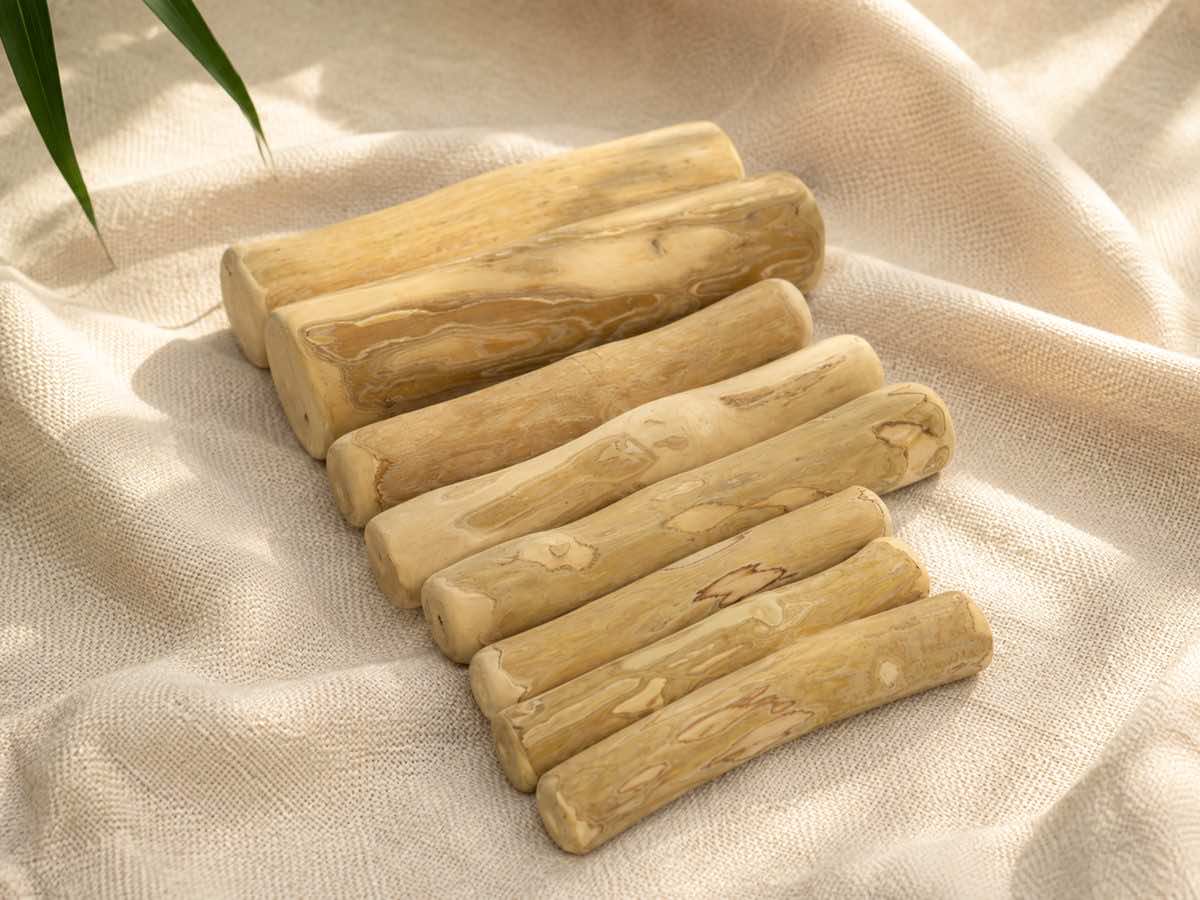
Sizes are natural and vary slightly piece to piece. Diameter is given as a range rather than a figure.
The same table, together with carton, pallet and container figures, packing modes and commercial terms, is on the wholesale specifications page. This page is about how to choose between the rows.
2. Why dog weight is only an opening bid
Weight bands exist because weight is the one number a shopper reliably knows about their own dog. They are a useful shorthand and a poor model of what actually wears a chew down.
- Chewing style beats body mass. Two 12 kg dogs can take a stick down at very different rates. One works methodically at one end; the other tries to crack the whole piece. The second dog needs the next size up regardless of what the scale says.
- Muzzle shape changes what a diameter means. A long-muzzled dog and a flat-faced dog of the same weight do not engage a 4 cm diameter the same way. Diameter, not length, is the dimension that decides whether a dog can get the piece between the back teeth.
- Age cuts both ways. A young adult chews harder than a senior of the same weight, and a puppy with adult teeth coming through chews differently again.
The practical rule that follows: when a dog sits at the top of a band, or is known to be a determined chewer, go up one size. The consequence of being one size too large is a chew that lasts longer. The consequence of being one size too small is the thing everybody is actually trying to avoid.
3. What the step between sizes looks like
4. The check that matters more than the chart
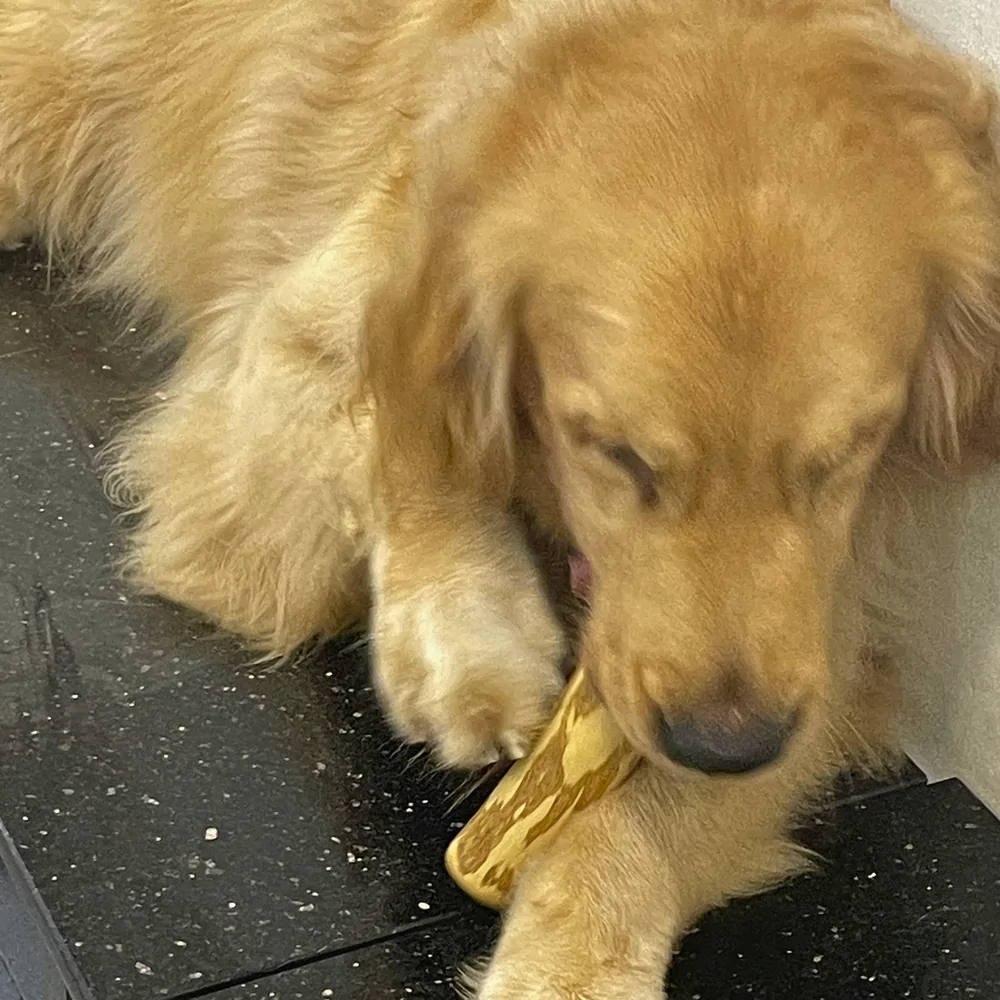
Once a piece is short enough that the dog can get the whole thing into its mouth, the size chart has stopped being relevant and the piece should be taken away. That threshold arrives sooner for a large dog on a small stick, which is the real argument for sizing up rather than down.
What WINVN INT will and will not say about this
No supplier can promise a hard chew is safe for every dog. Match the size to the dog's weight, supervise chewing, and take the piece away once it is small enough to swallow. Those three lines belong on your packaging.
5. When a block beats a longer stick
For dogs that are strong enough to get a stick across the back teeth and lever it, the answer is not a longer stick. It is a different shape.
Sizes S to XL, 8–16 cm long, 155 g – 1.1 kg a piece.
| SKU | Pieces per carton |
|---|---|
| GRLS | 60 |
| GRLM | 52 |
| GRLL | 52 |
| GRLXL | on request |
The Gorilla is a cut-short, thick block, not a long stick, and that is the whole point of it: there is less length for a dog to use as a lever.
Full detail on the block line, including how it is cut and what it is not suitable for, is on the Gorilla page.
6. The size mix
Ask for the packing sheet for the actual figures on your split.
How to choose a split without guessing
WINVN INT is regularly asked to recommend a mix, and the honest answer is that a supplier's order history describes its customers, not your market. What a supplier can usefully tell you is where the constraints are:
- MOQ is 50 pieces per product, sizes can be mixed, and private label uses the same MOQ. That is low enough that a starting order can carry all six sizes without committing to a ratio you have not tested.
- Test the mix on a starting order, buy to it on the next. The cost of carrying an extra size on a trial order is small; the cost of a container weighted to the wrong end is not.
- Anchor on your own dog population. The size band that sells is the one matching the dogs your customers already own, and you have that data from every other product you sell.
7. What goes on your pack, and whose exposure it is
If you are selling under your own brand, the sizing guidance printed on the pack is your responsibility, not the manufacturer's. That is worth stating plainly, because it changes what you should want from a supplier: accurate measurements, not reassuring adjectives.
- Print the three lines. Match the size to the dog's weight; supervise chewing; take the piece away once it is small enough to swallow.
- Give a weight band, not a breed list. Breed lists invite disputes, and a breed name is not a measurement.
- Do not print a safety promise. WINVN INT prints none on its own goods and makes none here, and an absolute claim on your pack is your liability in every market you sell into.
- Keep the size chart and the artwork in sync. If you print a diameter, print the range from the table. A single number implies a precision the material does not have.
- Watch the regulated adjectives. Environmental wording on pet-product packaging in the EU is being tightened by Directive (EU) 2024/825 from 27 September 2026, and the substantiation has to be yours.
The same division of responsibility runs through the private label page and the EU import guide: the manufacturer supplies measurable facts and documents, the brand owner makes the claims and carries them.
8. When no size on this page is the right answer
A size chart implies that somewhere on it is a row for every dog. There is not.
- Puppies with milk teeth and seniors with worn or missing teeth. This is a hard chew. Sizing down does not make it soft.
- Dogs that swallow rather than chew. A dog that tries to bolt pieces is not solved by a bigger stick; it is solved by a different product category.
- Buyers who need a stated calorie or nutritional value. Coffee wood is a chew, not a feed, and WINVN INT publishes no nutritional figures for it.
- Programmes that require every piece to be identical. If your packaging or your automated line needs a fixed diameter, this material will frustrate it, and it is cheaper to know that now.
The comparison hub sets out where other materials do the job better, including the cases where coffee wood is the wrong choice outright.
Questions buyers ask
What size coffee wood chew does a 10 kg dog need?
Size L on the WINVN INT stick chart: 18 to 19 cm long, 3.5 to 4.5 cm across, 120 to 180 g a piece, listed against a dog weight band of 8 to 12 kg. If the dog is a determined chewer at the top of that band, XL is the safer pick, because the failure mode that matters is a piece becoming small enough to swallow rather than a piece being too large.
Is dog weight a reliable way to choose a chew size?
It is a starting point, not a rule. Two dogs of the same weight can wear a stick down at very different rates depending on jaw shape, age and how methodically they chew. A flat-faced breed and a long-muzzled breed of identical weight do not handle the same diameter the same way. Weight bands exist because they are the one number a shopper knows; treat them as the opening bid and size up if the dog is a heavy chewer.
How many coffee wood chews fit in a 20 ft container?
The piece count depends entirely on the size mix and on how the cartons are loaded. Our sales team confirms the container count for your mix.
What size mix should a starting order use?
There is no universal answer, and any supplier who gives you one is guessing about your market rather than describing theirs. The useful discipline is to start from the dog population you actually sell to. The MOQ is 50 pieces per product and sizes can be mixed, so a starting order can carry all six sizes without committing to a mix.
When is the Gorilla block a better choice than a longer stick?
When the dog is powerful enough to get a stick across the back teeth and lever it. The Gorilla line is a short, thick block rather than a long stick, sizes S to XL, 8–16 cm long, 155 g to 1.1 kg a piece. The shape resists levering because there is less length to work with, which is a different answer from simply buying a longer stick.
What sizing wording should go on my own packaging?
Three lines, and they are the buyer's legal responsibility rather than the manufacturer's: match the size to the dog's weight, supervise chewing, and take the piece away once it is small enough to swallow. WINVN INT prints no safety claim on its own goods and makes none here. No supplier can promise a hard chew is safe for every dog, and a size chart is guidance rather than a promise.
How much size variation is there between pieces?
Sizes are natural and vary slightly piece to piece, which is why the chart gives diameter as a range rather than a figure.
Send us your split and we will send the packing sheet
Give WINVN INT the sizes and quantities you are considering and you get back the carton count, the cube, the pallet plan and the container fill for that exact mix — before you commit to it. 3 free samples per customer. You cover the shipping cost, which can be credited against your first qualifying production order. Our sales team confirms the details.
Get the packing sheet for your mix