By Mark Ton, CEO, WINVN INT CO., LTD · Last updated 29 August 2026
Three names come up when a shop looks for a long-lasting chew: coffee wood, bully sticks and antler. Each one fails in a different way. John Lewis, VMD, a Diplomate of the American Veterinary Dental College, writing in Veterinary Practice News, names antler as one of the most common offenders in causing carnassial tooth fractures — the carnassial being the large shearing tooth at the back of a dog’s jaw. A 2013 study in the Canadian Veterinary Journal measured 26 bully sticks at 9 to 22 calories per inch and cultured bacteria from 9 of them.
Coffee wood is a plant material rather than an animal one, so it adds no meat calories and travels a different customs route. Coffee wood is also a hard material, and no laboratory has published a fracture-risk study on it in either direction. WINVN INT CO., LTD does not hold one. This page sets out where coffee wood loses as well as where it wins.
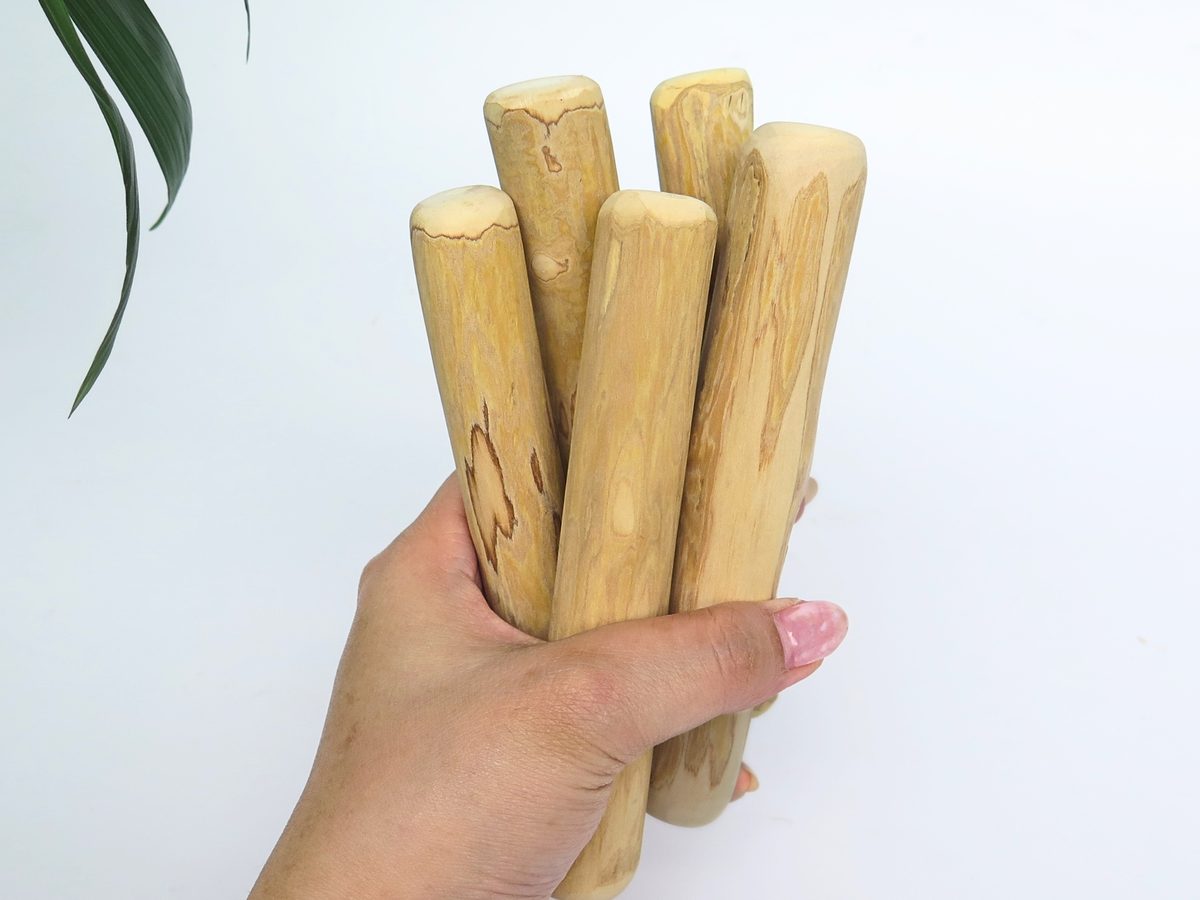
Which chew is hardest on a dog’s teeth?
This is the question a buyer should ask first, and it is the one where marketing language and the published literature disagree most sharply. The chew sold hardest on being indestructible is often the one that ends up in a veterinary dental case report.
John Lewis, VMD, DAVDC, writing in Veterinary Practice News, names antler as “one of the most common offenders in causing carnassial tooth fractures.” His advice to owners is to choose chews that have some give in them.
That advice applies to coffee wood too, and WINVN INT CO., LTD would rather say so here than have a shop find out from a customer. Coffee wood is a hard material. No laboratory has published a fracture-risk study on coffee wood in either direction, and WINVN INT CO., LTD does not hold one. Any supplier who states that a hard chew cannot break a tooth is stating something nobody has measured.
The European pet food federation FEDIAF states plainly that “there isn’t currently a specific legal standard for hardness for dog chews.” A 2024 review in Today’s Veterinary Practice notes that both the World Small Animal Veterinary Association and the British Veterinary Dental Association flag tooth fractures from very hard chew treats, and that a recent systematic review found definitive conclusions difficult because of weaknesses in study design. In other words, the profession agrees that hard chews carry a risk and has not agreed where the line sits.
| Chew type | Material | What the published literature says |
|---|---|---|
| Antler | Dense bone | Named by a veterinary dentist as a common cause of carnassial fractures |
| Nylon bone | Rigid molded polymer | Grouped with antler, bone and hooves in the same fracture-risk discussion |
| Coffee wood | Plant material, hard | No published fracture study in either direction |
| Bully stick | Dried beef muscle; softens with saliva | Discussion in the literature is calorie density and bacterial load, not fractures |
The practical rule these sources point towards has nothing to do with brand: if a chew does not bend, flex or mark when a thumbnail is pressed into it, it is in the hardness range the veterinary literature associates with fractures. That test costs nothing and it works on every product on a shelf, including WINVN INT’s.
Sources: Lewis J, VMD, DAVDC, “Advise clients ‘durable’ treats are not worth the risk of tooth fractures, tissue injuries”, Veterinary Practice News Read the article · FEDIAF, Chews and treats for dogs Read the fact sheet · “The Benefits and Risks of Chew Treats”, Today’s Veterinary Practice Read the review
Why there is no verdict column in that table
An earlier draft of this page marked antler and nylon as “advised against”. That would have turned one clinician’s opinion into a ruling on another category’s stock, and the ranking of coffee wood beside it would have rested on test data that does not exist. The table now reports what has been published and stops there.
How many calories does each chew add to a dog’s day?
A 2013 study in the Canadian Veterinary Journal measured 26 bully sticks. Calorie density ran from 9 to 22 calories per inch. An average six-inch stick came in at 88 calories. For a shop, that is a conversation with any customer managing a dog’s weight.
The same 26 sticks were cultured. One carried MRSA, one carried Clostridium difficile, and seven carried E. coli, one of those antibiotic-resistant. That study is from 2013 and sampled 26 sticks from one region. It says nothing about any bully stick on sale today, and WINVN INT CO., LTD is not suggesting otherwise. It is cited here because it is the study a buyer will find if they search, and because it is the reason many shops now ask a bully stick supplier for a microbiological certificate of analysis. That is a reasonable thing to ask of any supplier of any animal-derived chew.
Coffee wood is not a rendered animal product and is not eaten as a meal — the stick is worn down rather than consumed — so coffee wood does not add meat calories to a dog’s daily intake the way a bully stick does.
Source: Freeman LM, Janecko N, Weese JS, “Nutritional and microbial analysis of bully sticks and survey of opinions about pet treats”, Canadian Veterinary Journal 2013;54:50–54. Summary from Tufts University
Does coffee wood contain caffeine?
This is the question that stops retail buyers, and it deserves a precise answer rather than a reassuring one.
Caffeine in Coffea plants is made in young leaves and accumulates in leaves and in the developing bean. Young robusta leaves run near 3% caffeine by dry weight, and the genes that build caffeine are expressed 10 to 70 times more strongly in leaves than in maturing beans. The published work covers leaves and fruit. It does not report the trunk as a caffeine store.
WINVN INT CO., LTD makes chews from debarked trunk wood, not from leaves, bark or beans. The honest position is this: the published plant science points away from the trunk as a caffeine store, and WINVN INT CO., LTD has not found a published laboratory assay of coffee trunk wood in either direction. Until a result exists with a laboratory name and a report number behind it, WINVN INT CO., LTD will not put a figure on this page.
Source: Perrois C, et al., “Differential regulation of caffeine metabolism in Coffea arabica and Coffea canephora”, Planta 2015;241:179–191. Read the paper
Where does coffee wood lose to bully sticks and antler?
A comparison page in which the writer’s own material wins every row is not a comparison. Here are the rows coffee wood loses.
Coffee wood is the wrong chew for a destructive chewer
A Malinois or a strong-jawed bully breed can break pieces off a stick, and once a piece comes off it has to be taken away from the dog. A bully stick, which softens with saliva, suits that dog better. If a shop mostly serves working-breed owners, saying so at the point of sale means taking fewer returns later.
Coffee wood has to be replaced
Once a stick is worn down small enough to swallow, it goes in the bin. That makes coffee wood a consumable rather than a one-time purchase — good for repeat revenue, disappointing for a customer who expected one stick to last a year. Antler wins outright on this row: an antler outlasts almost everything.
Coffee wood is not uniform
Coffee wood is a natural material, so sticks vary in grain, colour and density from one tree to the next. A buyer who wants the shelf uniformity of an extruded nylon bone will not get it from coffee wood, and a customer who compares two sticks in the same pack will see the difference.
Bully sticks and antler are already understood
Customers know what a bully stick is. Coffee wood needs explaining, and explaining costs staff time on the floor. That is a real cost in a busy shop, and it is worth pricing into the decision.
Pass these three instructions on with every hard chew
- Match the size of the chew to the dog’s body weight, not to the dog’s enthusiasm.
- Keep the dog supervised for the whole time it is chewing.
- Take the piece away once it is worn small enough to swallow.
These apply to any hard chew, coffee wood included. A shop that says them out loud takes fewer returns than a shop that prints them on the back of the pack.
The European pet food federation FEDIAF gives the first two of those as general guidance for any chew, and notes that there is currently no specific legal standard for hardness in dog chews. FEDIAF fact sheet
What does each chew cost a retailer to stock?
| Stocking factor | Coffee wood | Bully stick | Antler |
|---|---|---|---|
| Shelf life | Years, if kept dry | Months | Years |
| Storage handling | Dry shelf, no odour control | Dry storage plus odour control | Dry shelf |
| Raw material supply | Coffee farm replanting cycles | Beef slaughter volumes | Seasonal antler drop |
| Import route into the EU | Plant product — phytosanitary certificate | Animal by-product — veterinary control route | Animal by-product — veterinary control route |
| Moisture on delivery | Measured below 14% at the factory before packing | Ask the supplier | — |
| WINVN INT minimum order | 50 pcs per product, sizes can be mixed; the same MOQ with your own printed label | — | — |
| Wholesale price | On request, by volume tier | — | — |
The import row is the one buyers underestimate
Coffee wood is a plant product and travels on a phytosanitary certificate where the importing market requires one. Bully sticks and antler are animal by-products and enter the European Union through a veterinary control regime with approved-establishment requirements and inspection at a designated border control post. That difference does not show up on a price list, and it is often the line that decides landed cost.
Which one should a buyer stock?
Stock bully sticks for customers with small and medium dogs who want a chew that disappears in twenty minutes. Stock antler for customers who already ask for it by name and who have been talked through the fracture risk described above. Stock coffee wood for customers who want a chew that lasts, with no meat calories and a plant-product import route that keeps the customs paperwork short.
Most shops that carry coffee wood carry bully sticks as well. The two are not competing for the same purchase, and a shelf that holds both answers more customers than a shelf that picks a side.
WINVN INT CO., LTD has supplied coffee wood chews since 2019. We can ship up to 100,000 pieces a month across all our product lines. Orders start at 50 pcs per product — sizes can be mixed — and products with your own printed label use the same MOQ. Fifty pieces on a shelf for a month answers the stocking question better than any comparison page can.
Questions buyers ask
Is coffee wood safer than antler for a dog's teeth?
No published laboratory study compares the two on fracture risk, so nobody can answer that with data. What is on record is that a veterinary dentist writing in Veterinary Practice News names antler as one of the most common offenders in causing carnassial tooth fractures, and that FEDIAF says there is currently no specific legal standard for hardness in dog chews. Coffee wood is also a hard material and carries the same general caution that applies to any hard chew.
Does coffee wood contain caffeine?
WINVN INT does not hold a laboratory assay of coffee trunk wood and will not state a figure without one. Published research in the journal Planta reports that caffeine in the coffee plant is made in young leaves and accumulates in leaves and the developing bean, and does not report the trunk as a caffeine store. Chews are made from debarked trunk wood, not from leaves, bark or beans.
How many calories does a bully stick add to a dog's day?
A 2013 study in the Canadian Veterinary Journal measured 26 bully sticks at 9 to 22 calories per inch, with an average six-inch stick at 88 calories. Coffee wood is a plant material that is worn down rather than eaten, so it does not add meat calories in the same way.
Where does coffee wood lose to bully sticks and antler?
In four places. A destructive chewer can break pieces off a coffee wood stick, and a softer bully stick suits that dog better. Coffee wood is a consumable that has to be replaced once it is worn small, while an antler outlasts almost everything. Coffee wood varies in grain, colour and density between sticks because it is a natural material. And customers already know what a bully stick is, whereas coffee wood needs explaining, which costs staff time on the shop floor.
Why is the customs route different for coffee wood?
Coffee wood is a plant product and ships with a phytosanitary certificate naming the botanical genus, a fumigation certificate or a certificate of origin when your market requires them. Bully sticks and antler are animal by-products, which enter the European Union through a veterinary control regime with approved-establishment requirements and inspection at a designated border control post. That difference does not appear on a price list but it often decides landed cost.
What is the minimum order for coffee wood chews?
50 pcs per product — sizes can be mixed. Products with your own printed label use the same MOQ. Fifty pieces is enough to test whether coffee wood moves in a particular shop before committing shelf space.
See the wood before you commit shelf space
MOQ starts at 50 pcs per product — sizes can be mixed. 3 free samples per customer. You cover the shipping cost, which can be credited against your first qualifying production order. Our sales team confirms the details.
Request samples and wholesale pricing