By Mark Ton, CEO, WINVN INT CO., LTD · Last updated 29 August 2026
Rawhide is a by-product of the leather industry and is processed to get there. The US Food and Drug Administration has published a recall, since completed and terminated, covering five rawhide brands after a quaternary ammonium compound was used as a processing aid without approval. Coffee wood is a single plant material.
That difference changes two things for a buyer: what goes into the dog, and which regulatory route the shipment travels. The second one is the part most suppliers never mention, and it is usually the one that costs money.
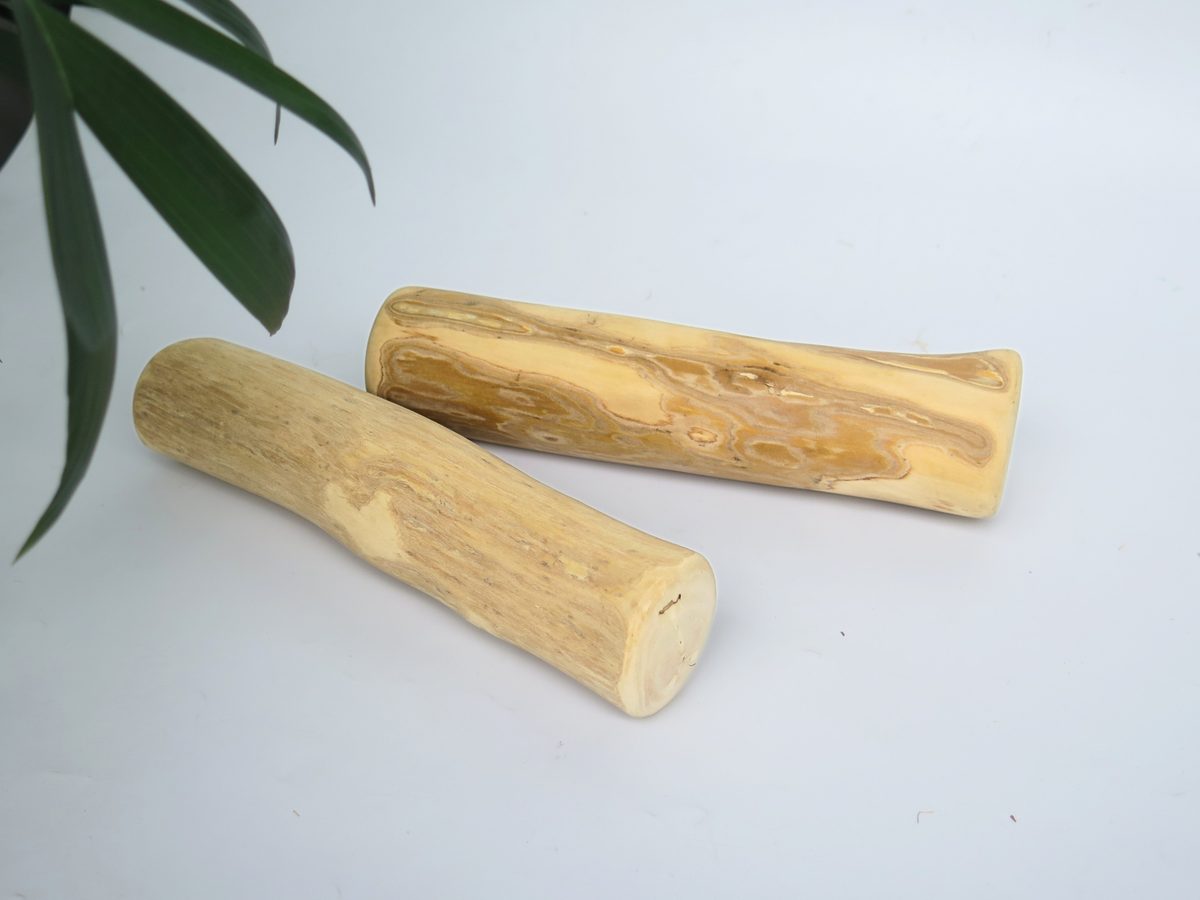
What is rawhide actually made of?
Rawhide starts as the inner layer of cattle hide, split off during leather production. It reaches a chew after cleaning, degreasing and often bleaching. That processing is the whole reason rawhide exists as a product: without it the hide would spoil.
That is also where the documented risk sits. The FDA published a voluntary recall covering five rawhide brands from one manufacturer. The stated reason was a quaternary ammonium compound mixture used as a processing aid. The compound is approved for cleaning food processing equipment. It was not approved in the United States as a processing aid in the production of rawhide chews for dogs. Reported symptoms were reduced appetite and gastric irritation, including vomiting and diarrhoea. That recall was completed and terminated by the FDA. It is set out here as a matter of public record about how rawhide is processed, not as a claim about any product on sale today.
The trunks are cut, dried under controlled conditions to below 14% moisture, and finished mechanically. WINVN INT measures the moisture at the factory, then vacuum-packs the chews to hold that level.
Source: U.S. Food and Drug Administration, “United Pet Group Voluntarily Recalls Multiple Brands of Rawhide Chew Products for Dogs Due to Possible Chemical Contamination”, announced 10 June 2017. Read the FDA notice
Which one is easier to bring across a border?
Here is the part that decides landed cost, and almost nobody selling chews will raise it.
Rawhide is an animal by-product. Coffee wood is a plant product. Those two categories travel different regulatory routes into most markets, and the animal route is the slower and more expensive of the two. Animal by-products entering the European Union sit under a veterinary control regime with approved-establishment requirements and inspection at designated border control posts. Plant products travel on a phytosanitary certificate instead, where the importing market requires one.
For coffee wood, WINVN INT arranges a phytosanitary certificate naming the botanical genus Coffea sp., a fumigation certificate or a certificate of origin when your market requires them, and issues that certificate of origin as EUR.1 under the EU–Vietnam Free Trade Agreement for EU buyers, when the goods qualify for origin.
Commodity codes are worth asking about rather than assuming. Coffee wood chews are declared by some suppliers as an article of wood and by others as complementary pet food, and those are different tariff lines. Ask which code a supplier’s last EU shipment cleared under, then ask your own broker whether they agree.
| Import factor | Coffee wood | Rawhide |
|---|---|---|
| Regulatory category | Plant product | Animal by-product |
| EU route | Phytosanitary certificate | Veterinary control regime, border control post |
| Commodity code | Ask your supplier and your broker | Ask your supplier and your broker |
| EU preferential origin | WINVN INT issues EUR.1 under EVFTA when the goods qualify | Depends on the origin country’s agreement |
| Storage requirement | Dry, ventilated; shelf life stated on the spec sheet | Check the supplier’s stated shelf life |
| Additives used in production | None | Varies by manufacturer — ask for the process description |
Why this table matters more than a hardness chart
A retailer chooses a chew. An importer chooses a route. The route decides whether a container clears in two days or sits at a border control post, and that is a cost the supplier never sees on their side of the invoice.
Which one lasts longer?
It depends on the dog, and any supplier quoting a number in hours is guessing. Rawhide softens and is chewed down and swallowed.
The commercial consequence differs. A rawhide chew is consumed. A coffee wood chew is worn down until it is small enough to swallow, at which point it must be taken away and replaced. Both are consumables. Coffee wood usually lasts longer per unit, which is good for the end customer and slower for a reorder cycle.
Where does coffee wood lose to rawhide?
On price per unit, most of the time. Rawhide is a by-product of an industry that already operates at enormous scale, so the raw material is cheap. Coffee wood competes with firewood buyers for old trunks and goes through a drying and quality protocol before a single stick is cut to size. That cost is real and it lands in the price.
Coffee wood does not suit every dog. Coffee wood is a hard material. A powerful chewer can break a piece off a stick. If a shelf mostly serves working breeds, that belongs in the conversation at the point of sale rather than after the return.
Rawhide has forty years of shelf presence. Customers know what it is. Coffee wood needs explaining, and explaining costs staff time on the floor.
Pass these three instructions on with every hard chew
- Match the size to the dog’s body weight, not to the dog’s enthusiasm.
- Keep the dog supervised while chewing.
- Take the piece away once it is worn small enough to swallow.
These apply to any hard chew, coffee wood included. A shop that says them out loud takes fewer returns than a shop that prints them on the back of the pack.
The European pet food federation FEDIAF gives the first two of those as general guidance for any chew, and notes that there is currently no specific legal standard for hardness in dog chews. FEDIAF fact sheet
Should you replace rawhide or stock both?
Stock both, in most shops. They serve different customers. Rawhide keeps the price-sensitive buyer who has always bought it. Coffee wood takes the customer who has read something about rawhide processing and wants an alternative, and the customer whose dog outlasts everything else on the shelf.
If you are choosing one, the question is not which chew is better. It is which customer you want to keep.
WINVN INT starts at 50 pcs per product — sizes can be mixed — and products with your own printed label use the same MOQ. To find out whether coffee wood moves in a particular shop before committing shelf space, 50 pieces answers the question.
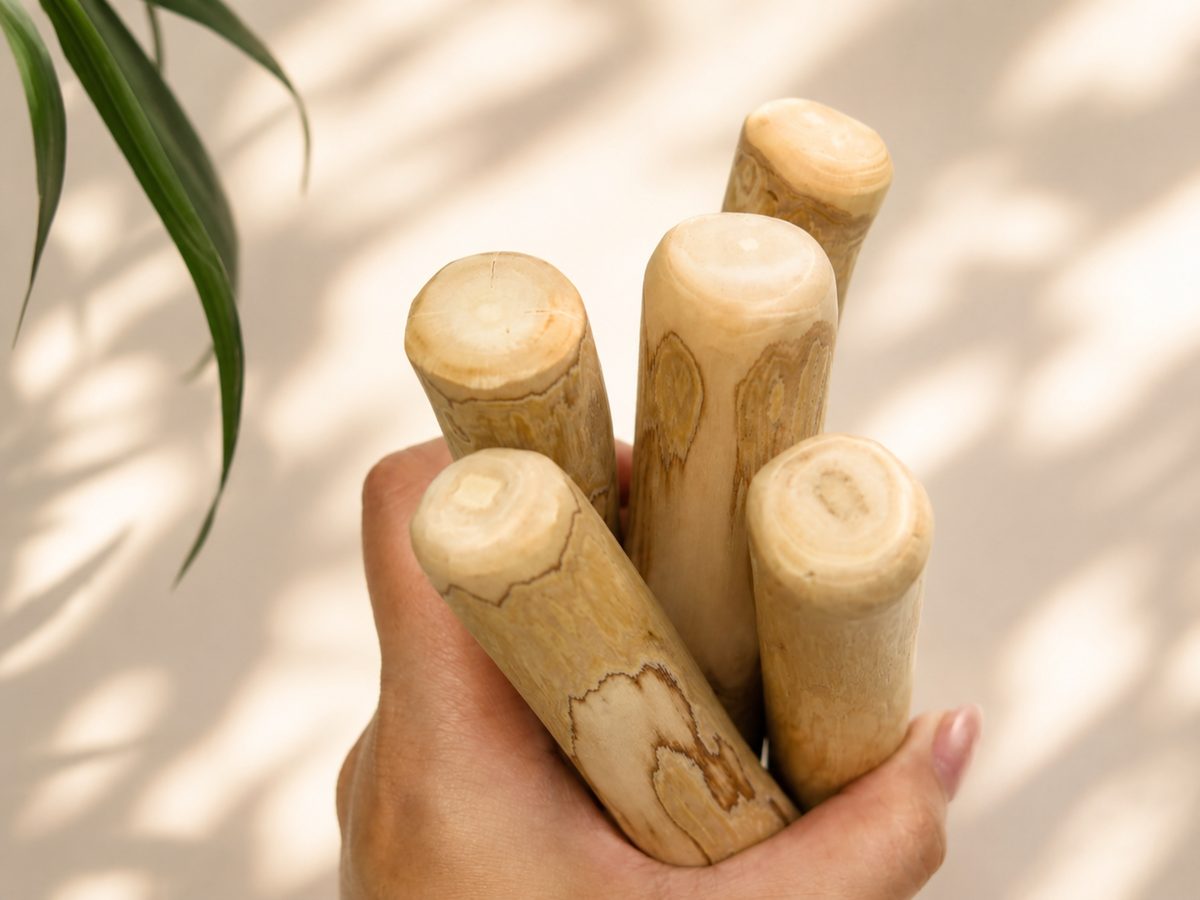
What either side can actually prove
Most of the argument between these two materials is conducted in adjectives. The useful question for a buyer is narrower: which statements come with a document, and which are opinion that will not survive a complaint.
| Statement | Checkable? | By what |
|---|---|---|
| Rawhide is processed during manufacture | Yes | The producer's own process documentation. The FDA has published a recall, since terminated, over an unapproved processing aid used by one manufacturer |
| Moisture content below 14 % | Yes | Measured at the factory, and your own pin meter on arrival costs very little |
| Origin, and whether duty preference applies | Yes | Movement certificate EUR.1 |
| “Lasts longer” | No | There is no standardised durability test for pet chews. Wear depends on the individual dog, and any general ranking is an opinion presented as a measurement |
| “Safer” | No | No supplier can promise a chew is safe for a particular dog. Both materials are hard consumables that need size matching, supervision, and removal once worn small |
| Environmental or compostability claims | No | No life-cycle assessment exists for this product, so WINVN INT publishes no rate, no timescale and no carbon figure |
The practical use of that table is in writing a product listing. Every sentence that maps to a row in the top half can be defended with a document if a customer, a marketplace or a regulator asks. Every sentence that maps to the bottom half is a liability the retailer carries, not the supplier — which is why WINVN INT will not supply that wording even when a buyer asks for it.
This page deliberately does not say rawhide is dangerous. It is a long-established product sold in enormous volume, and a blanket warning would be exactly the kind of unsupported claim the table above argues against.
Questions buyers ask
Is coffee wood safer than rawhide?
Neither material is risk-free, and no supplier can promise a chew is safe for every dog. What can be stated is the difference in processing: rawhide is processed during production, and the FDA has published a recall, since terminated, over an unapproved processing aid used by one manufacturer. Coffee wood is a single plant material. Both are hard consumables that require size matching, supervision, and removal once worn small.
Does coffee wood splinter?
Coffee wood is a hard material and a powerful chewer can break a piece off. Match the size to the dog's weight, supervise chewing, and remove the piece when it is worn small.
Why is coffee wood more expensive than rawhide per piece?
Rawhide is a by-product of an industry that already runs at huge scale, so its raw material is cheap. Coffee wood competes with firewood buyers for old trunks and goes through a drying and quality protocol.
Does coffee wood contain caffeine?
WINVN INT does not hold laboratory results for caffeine content in coffee trunk wood and will not claim a chew is caffeine-free without them. Published research in the journal Planta reports that caffeine in the coffee plant concentrates in the leaves, fruit and seed rather than in mature woody trunk tissue. Until results exist, the honest answer is that the figure is not confirmed.
What paperwork does a coffee wood shipment travel on?
Packing list, commercial invoice and bill of lading or air waybill for every shipment, plus a phytosanitary certificate naming the botanical genus, a fumigation certificate or a certificate of origin when your market requires them — the certificate of origin issued as EUR.1 under the EU–Vietnam Free Trade Agreement for EU buyers, when the goods qualify for origin. WINVN INT can send samples of the phytosanitary certificate, the fumigation certificate and the certificate of origin, with buyer details redacted.
What is the minimum order?
50 pcs per product — sizes can be mixed. Products with your own printed label use the same MOQ.
See the wood before you commit shelf space
MOQ starts at 50 pcs per product — sizes can be mixed. 3 free samples per customer. You cover the shipping cost, which can be credited against your first qualifying production order. Our sales team confirms the details.
Request samples and wholesale pricing